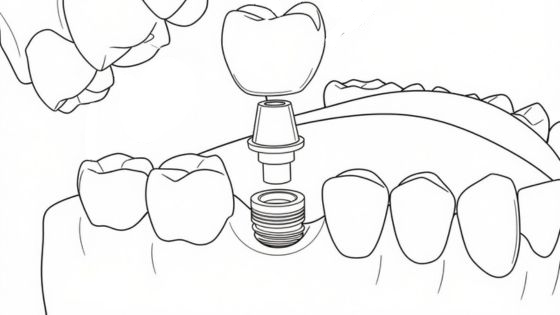
For years, titanium has been the default material for dental implants — strong, reliable, and backed by decades of data. Zirconia, the white ceramic alternative, has often been positioned as a more specialized or aesthetic choice. A new review of real-world cases is quietly shifting that conversation.
A scoping review published this summer examined 779 zirconia implants placed in 459 patients. What makes the work notable is not just the numbers, but the kinds of patients included. Many had conditions that dentists encounter every day: well-controlled diabetes, cardiovascular disease, smoking habits, or the need for immediate placement and loading. These are not the carefully selected, perfectly healthy subjects who fill many clinical trials. They look more like the people who actually walk into dental offices.
What the Review Found
Of the 779 implants, 671 were immediately loaded — meaning a temporary tooth was attached right away rather than waiting months for healing. Follow-up periods ranged from one to five years. Across the studies, marginal bone levels (the bone height right around the implant) stayed within clinically acceptable ranges. Outcomes held up even in the presence of selected risk factors.
The review does not claim zirconia is superior, or that it works for every compromised patient. It simply shows that the material is being used — and studied — in more complex, real-life situations than before. Controlled systemic conditions and common local challenges are no longer automatically excluded from the conversation around ceramic implants.
A separate meta-analysis from earlier this year, looking at direct comparisons, found no statistically significant differences in survival rates between zirconia and titanium implants at one, three, and five or more years. Bone stability and patient-reported outcomes were also similar. Together, the two pieces of research paint a picture of a maturing option rather than an experimental one.
How the Materials Differ in Practice
Titanium remains the gold standard for a reason. It has the longest track record, the widest range of implant designs and prosthetic components, and extensive data stretching past 20 years in many studies. It is highly versatile for complex full-arch cases and situations requiring maximum strength.
Zirconia offers a different set of advantages. Because it is tooth-colored, it can look more natural in the front of the mouth, especially if gum tissue is thin. It is completely metal-free, which appeals to patients with metal sensitivities or those who simply prefer to avoid metal. Some research suggests zirconia accumulates less bacterial biofilm than titanium, which may support healthier soft tissue around the implant. The material is also highly biocompatible.
There are trade-offs. Zirconia implants are generally more expensive. The range of available designs and restorative options is still narrower than titanium’s. While modern zirconia is strong, titanium retains an edge in the most mechanically demanding situations. Long-term data beyond five to ten years is still thinner for zirconia, though the gap is closing.
Who Might Prefer Which?
Patients who prioritize aesthetics in the smile zone, want a metal-free solution, or have concerns about titanium often lean toward zirconia. Those needing extensive full-mouth rehabilitation, dealing with very high bite forces, or seeking the broadest prosthetic flexibility may still be better served by titanium. In many routine single-tooth or smaller cases, either material can deliver excellent results when placed carefully.
The decision is rarely about one material being universally better. It comes down to the individual mouth: bone quality, gum biotype, aesthetic demands, medical history, and the dentist’s experience with each system.
What Still Needs Clarifying
The new review is careful about its limits. Evidence is thinner for patients with osteoporosis, autoimmune conditions, or a history of head and neck radiation. Longer-term data and more standardized protocols would strengthen the picture. Direct head-to-head studies of the latest two-piece zirconia systems are still relatively few.
In other words, zirconia has moved well beyond the “promising alternative” stage for many everyday situations, but it has not erased the need for careful case selection and clinician judgment.
A Quieter Kind of Progress
Dental implant news often focuses on dramatic breakthroughs — new surfaces, smarter digital planning, or regenerative dreams of growing real teeth. This summer’s zirconia data is quieter. It simply shows that a metal-free option is performing respectably in the kinds of patients dentists actually treat.
For someone weighing implant options, that kind of information may be more useful than the latest hype. Both materials work. The better question is which one fits the specific person in the chair.
Affordable Dental Implants
Curious about dental implants?
Book an implant consultation with the best dentist in Framingham
sources
https://www.urmc.rochester.edu/news/story/eastman-institute-awarded-2-9-million-to-study-dental-implant-failures
https://www.swissdentalsolutions.com/us/blog/study-of-the-month-june-2026-zirconia-implants-in-real-world-clinical-practice-insights-from-779-implants
https://www.cureus.com/articles/465956-comparative-evaluation-of-titanium-versus-zirconia-implants-for-their-clinical-outcomes-an-overview-of-reviews#!/